
Is there a way to create big change with no tears?
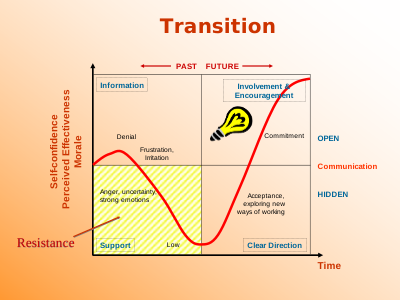
Adapted from the Change Curve model (based on Kübler‑Ross). Source unknown.
Logical incrementalism (a method devised by James Brian Quinn, a Harvard University Professor) claims to be one. Quinn examined large organisations in the throes of extensive change, and developed a pattern of planning that corporate leaders could use to make effective changes and to ease the acceptance of change. The emphasis is on process and evolutionary change – an adaptive style. The stages of logical incrementalism are:
- The recognition of a general concern as an issue or as an opportunity.
- The floating of an idea in search of reactions and pros and cons.
- The formal development of a change program.
- The use of a crisis or other opportunity to facilitate the change (it could be the retirement of a senior executive, a sudden loss of market share, or an external crisis).
- The progressive adapting of the plan during its implementation
I don’t know about you but most of my clients don’t appear to have the luxury of enough time or circumstances lining up for them to be able to use this process when they announce a restructure or redundancies.
For many employers – faced with implementing change, downsizing and a restructure – there is pain and resistance. Employees may experience shock, anger and fear – sometimes guilt if they were not one of the people in a position that was made redundant.
Big Change, No Tears?
It’s not always possible because shock, and fear of loss, often lead to tears.
But – there are better ways to manage a restructure and redundancy process and not so great ways.
What not to do
Don’t let line managers in on what you plan if they haven’t been trained in change management. They need at least a briefing from you about the best way to deliver the news – and the best timing (and clarity about what not to do and why). Ideally your managers will receive training on what to expect from employees when change is announced, how employees may react – and what employees need from them at each stage of the transition curve so they can move through that stage and on to the next with the least resistance and stress. I offer training for top teams to plan the change; training for people leaders to know how people will react and how to support them through a change effectively; and training for everyone in understanding and managing one’s own reactions to change.
What happens if managers are not trained in managing the people aspects of change
- One client of mine let the line manager know that a member of their staff was going to receive the news of redundancy of their position the next week. For some reason the line manager gave the employee a heads up about this just before the weekend! As you can imagine there was a lot of shock and a lot of stress – with no appropriate support in place to assist the individual.
- In another organisation, the senior leaders understood the change, what was to happen and why – but told the line managers and employees very little of the rationale. In their own words “we treated them like the PC’s – picked them up on a Friday night and put them someone else to start work on a Monday morning”. The psychological contract and trust was broken. Employees of 20 – 30 years tenure were soon going home in tears and tantrums and quality of service dropped dramatically in once top performing teams.
Why do things go wrong when change isn’t managed well? When in the example above there were multiple causes: lack of involvement and communication about the change and its rationale leading to lack of employee understanding; lack of consultation, senior management understanding and flexibility; a clash of values and new technology being seen as not fit for purpose.
What happened? Low morale, frustration, stress, infighting, acute stress symptoms, increased sick leave, lack of trust in management and service standards and customer satisfaction dropped.
Causes and Consequences of a break in the Psychological Contract
| Main Causes | Content | Consequences |
| Lack of: – Involvement – Flexibility – Two-way communication – Clash of values – Technology seen as not fit for purpose. | Perceived lack of: – Fairness – Trust – Delivery of promises | Attitudinal Consequences Dissatisfaction Low morale Frustration I don’t give a damn! Stress Behavioural Consequences Infighting amongst units Acute stress symptoms/sick leave. Quality of service dropped/low. |
What can you do to create big change with no tears?
- Try to plan far enough ahead so you can provide training for senior leaders and line managers to help them plan and manage the people aspects of change well.
- Ideally provide some training on understanding reactions to change and transition to employees too.
- Consult and involve employees and line managers where possible in making the plans – and, if that’s not possible, consult those directly impacted after the announcement of change is made – giving them time to think.
- Make sure you offer outplacement services to support people who can not be re-deployed. Best practice these days is to also offer support to potential re-deployees via an outplacement service so they can consider the option of redundancy or re-deployment with external assistance (and a realistic assessment of their likelihood of finding an alternative role outside of the organisation).
- Provide clarity on whether you forsee more change and whether there may be more redundancies. If no more change is planned – employees will feel reassured if you tell them that.
- Provide support to everyone – you want your employees to stay but after redundancy it can be that you lose some good people you didn’t want to lose. This can happen if they feel guilty about not being selected or if they feel the organisation doesn’t operate within their values. How well you treated the employees who were retrenched or re-deployed impacts everyone.
Big change? No Tears? Maybe it really is possible after all.
In one organisation that I worked for offering redundancy services I heard from retrenched employees that were very happy with the redundancy package they were offered and the re-deployment opportunities. They felt that what was on offer was generous, gave them a choice and they felt sully supported by the outplacement process. As a result, when some of them were interviewed they said lovely things about the organisation – resulting in the employer winning a “Best Employer” award whilst it made redundancies.
Big change? No Tears? Maybe it really is possible after all.
For information about outplacement services, change management, psychological and wellbeing support for leaders, retrenched employees and those who stay – call Bridget Hogg for information and prices on 0477 016966 or email bridget@developmentatwork.com.au. See www.outplacementadelaide.com.au for testimonials and further information about outplacement services.